Tehran’s propaganda has moved far beyond official doctrine. In the algorithmic age, it fuses troll culture, symbolism, satire, AI voiceovers, viral clips, and online scandal into a form of narrative warfare meant to lay bare Western hypocrisy and the fragility of its moral claims.

April 19, 2026

By Sabah Al-Makki

April 19, 2026

Writing from within the storm

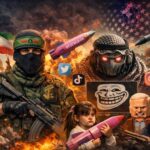
Iran’s wartime propaganda is no longer confined to slogans, sermons, or state television. It now moves through memes, AI voiceovers, troll aesthetics, and platform-native absurdity, turning internet junk culture into an instrument of narrative war.

That battle matters not because it rests on any single slogan, platform, or medium, but because it fuses nationalism, religion, historical memory, popular culture, and digital improvisation into a wartime narrative aimed squarely at confronting the United States (U.S.) and Israeli aggression. What is at stake is not merely domestic legitimacy, but the struggle to define Iran itself: a sovereign nation under siege, the Islamic Revolutionary Guard Corps (IRGC) as its shield, and the U.S. and Israel as aggressors whose own claims to moral authority can be turned back against them.

What has emerged is a form of “slopaganda“: AI-assisted, platform-native propaganda that borrows the speed, absurdity, visual grammar, and viral instincts of internet junk culture to wage narrative war at low cost and high velocity. Iran may not be able to dominate the conventional military balance against Washington and Tel Aviv, but it can still compete in the realms of attention, emotion, and interpretation. The aim is not necessarily to make Western audiences admire the Islamic Republic. It is to make them question the moral credibility of Western power, deepen fractures already running through rival societies, and reinforce the argument that Iran is not the author of chaos, but the object of aggression.