The United States continues to impose a comprehensive economic blockade on Cuba, nicknamed the “Island of Freedom,” with the aim of strangling it. The blockade policy and harsh sanctions have led to a sharp deterioration of the situation on the island, making it extremely difficult in recent times. This is primarily manifested in prolonged power outages and a near-total lack of fuel.

Furthermore, the US administration continues to issue threats against Havana, demonstrating its ongoing hostile approach. For its part, various leaks and press reports suggest the possibility of a US attack on the country to “resolve the Cuban question” once and for all.

The Position of Local Authorities

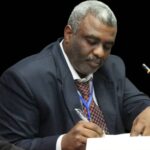
In light of this, Cuban Deputy Foreign Minister Josefina Vidal Ferreiro announced that US threats and pressure against Cuba are escalating daily, with tightened economic sanctions and increasing political pressure.

She recently stated that the risk of US military aggression against Cuba is increasing day by day. She asserted that Washington has intensified its economic pressure to an unprecedented degree in recent months. Ferreiro added that the new restrictive measures aim to strangle the Cuban economy and trigger a humanitarian crisis in her country. She also pointed out that the economic war against Cuba has been ongoing for more than six decades.

Moreover, she asserted that Washington continues to find new pretexts to intensify pressure on Havana to an unprecedented degree throughout this period. She emphasized that Cuba poses no threat to the United States and does not engage in any hostile activities against it.

At the same time, she affirmed that Cuba will defend its sovereignty and independence at any cost should it be subjected to any aggression.

For his part, Cuban President Miguel Díaz stated that Washington is considering three scenarios against Cuba. He explained that these scenarios are: instigating a social explosion, seizing control of the economy, or resorting to military aggression. He said that the aggression of the US government and its policies will be met with Cuba’s unwavering will to confront even the most difficult scenarios.

Diaz affirmed in his remarks that his country will defend its independence and sovereignty and will not yield to US pressure. He made these remarks following new sanctions imposed on the island by the US administration.

Diaz also confirmed that his country is ready for dialogue with the US on any contentious issues. However, according to him, they do not trust the Americans’ seriousness and integrity. Diaz added that dialogue must be based on equality and mutual respect, not threats or blackmail.

Foreign Companies Leave Cuba

Foreign newspaper Politico reported that European companies have begun leaving Cuba as the new US sanctions take effect.

These companies range from major Spanish hotel chains to German shipping companies. They have begun scaling back their operations after Washington expanded the sanctions to include trade relations between the European Union and Havana.

Among the hardest hit are the Spanish hotel groups Meliá and Iberostar, according to the newspaper. The sanctions also target foreign companies that do business with Cuban government entities, most notably the military-run GAESA conglomerate.

This package of sanctions threatens to draw the European Union into the heart of the conflict. Faced with the risk of asset freezes, European companies operating in various sectors are accelerating their divestment from the island.